As the 2026 FIFA World Cup approaches, we’ve been taking a look at some of the notable teams and players of tournaments past in our special warm-up series, and in this feature, the competition’s most impactful debutants are under the microscope.
This year, players from Jordan, Uzbekistan, Cape Verde and Curacao will sing their national anthems and play at the World Cup for the first time ever.
Make no mistake, their appearances this summer will be significant historical moments for each of those new qualifying nations, and while they are unlikely to feature in any World Cup winner odds comparison, their presence on international football’s biggest stage will still be celebrated.
If Jordan, Uzbekistan, Cape Verde or Curacao need any extra inspiration, then they have several trailblazing counterparts to draw it from.
Over the last century, a number of first-time World Cup qualifiers have made incredible instant impacts, creating lasting memories that are still recounted with fondness today. Let’s take a look at some of them now.
5. Ukraine (2006) – Quarter-Finals
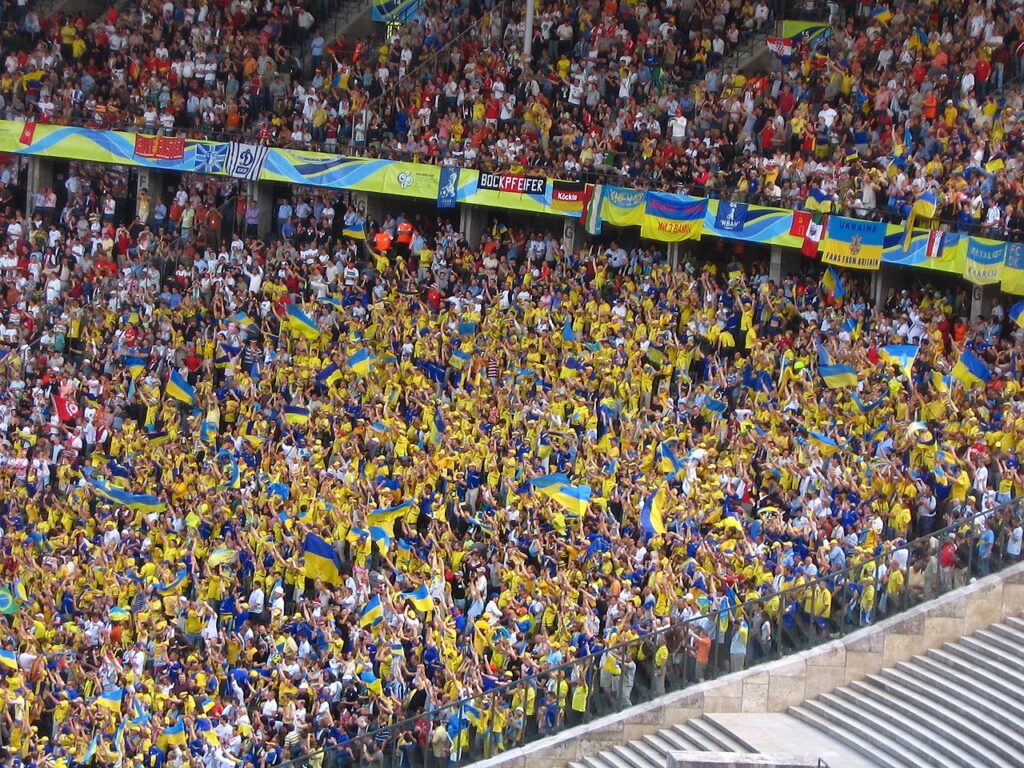
Ukraine finally emerged from the post-Soviet breakup to qualify for their first-ever World Cup in 2006, having topped their tricky qualification section ahead of Turkey, Denmark and Greece in the UEFA region.
Coached by the vastly experienced Oleg Blokhin, Ukraine’s squad was largely made up of players from the country’s top domestic division, however, in AC Milan’s Ballon d’Or winner, Andriy Shevchenko, they had one of the planet’s best players at the time.
Placed in Group H alongside Spain, Tunisia and Saudi Arabia, the Ukrainians were presented with a favourable-looking route to the knockout phase, and they rebounded brilliantly from a heavy 4-0 defeat to La Roja on matchday one to finish second.
Ukraine danced to a 4-0 win over Saudi Arabia on matchday two and booked their place in the next round with a 1-0 victory over Tunisia in their third group game, thanks to a crucial second-half penalty from Shevchenko.
Advancing to the Round of 16, they faced Switzerland in a tense, tactical and ultimately goalless affair, though they held firm in the subsequent penalty shootout, recovering from Shevchenko’s early miss, to prevail. That was the first time Ukraine had won a knockout match at a major international tournament.
The quarter-final against eventual champions Italy proved a step too far, ending in a 3-0 defeat, but reaching the last eight on their debut was a remarkable achievement for a nation still building its football identity, and really, Ukraine were in bonus territory by then, surpassing all expectations.
If you’re looking around for where to bet on World Cup 2026, you’ll have noticed Ukraine’s absence from the markets. They have failed to qualify for every World Cup since their tournament debut, making their achievements in 2006 all the more remarkable.
4. Senegal (2002) – Quarter-Finals
First-time qualifiers Senegal were unfancied ahead of their adventure in the Far East in 2002, and many observers had actually tipped them to finish bottom of Group A, a section they shared with Denmark, Uruguay and defending champions, France.
On matchday one in Seoul, Senegal would face Les Bleus in a fixture that had a real edge given France’s colonial history in Africa.
What made the game even more intriguing was the fact that Senegal were managed by French coach Bruno Metsu and had a squad made up of players who plied their trade in the French league. Indeed, all but two of the names on Senegal’s roster were attached to clubs in France.
Despite being massive underdogs, Senegal rose to topple France, thanks to a single, legendary scruffy goal from Papa Bouba Diop. His strike sparked iconic joyful scenes, with dancing celebrations near the corner flag.
That shock win had a major ripple effect, with unbeaten Senegal going on to finish second, while France never recovered and exited in last position.
In the Round of 16, the Lions de la Téranga saw off Sweden in extra time thanks to a golden goal from Henri Camara and though they were eventually knocked out by Turkey in the quarter-finals, their place in the history books was confirmed.
Afterwards, a number of Senegal’s star players earned big-money summer moves, including El Hadji Diouf and Salif Diao, who both signed for Premier League giants Liverpool.
3. Republic of Ireland (1990) – Quarter-Finals
Talk to any Irish person of a certain generation and they will tell you that the Boys In Green’s run to the quarter-finals of Italia 90 helped to ignite a new era of hope and optimism across the entire country.
As an Irishman myself, I remember the Republic of Ireland’s bow at the World Cup like it was yesterday. I can vividly recall the impact it had on families and entire communities, as people came together to follow and support the team on their journey.
Under manager Jack Charlton, Ireland played a pragmatic, direct style of football, with “put ‘em under pressure” the team’s mantra.
There was real quality in there too however, with Liverpool’s Steve Staunton, Ronnie Whelan and Ray Houghton, Aston Villa’s Paul McGrath and Everton’s Kevin Sheedy among a clutch of high-level performers playing in England’s top tier.
Ireland drew all three of their matches in Group F against old enemies England (1-1), Egypt (0-0) and a formidable Netherlands (1-1) side that featured Ruud Gullit, Marco van Basten and Ronald Koeman.
In a tight section, Ireland advanced in second spot and were paired with Romania in the Round of 16. After a tense 120 minutes, Ireland came through a penalty shootout, with keeper Packie Bonner saving the Romanians’ fifth effort and Arsenal’s David O’Leary dispatching Ireland’s last spot-kick.
The euphoria back in Ireland was hard to describe as people everywhere took to the streets in celebration, forming convoys and waving tricolours.
Ireland were beaten in the quarter-finals by host nation Italy, with penalty-box predator, a Salvatore “Toto” Schillaci delivering the single, telling blow in Rome.
However, Italia ’90 remains a landmark in Irish sporting history, boosting national morale and inspiring a generation of future footballers.
2. Portugal (1966) – Third Place
Portugal are considered one of international football’s powerhouse nations these days, however, they weren’t involved in any of the first seven editions of the World Cup, eventually appearing for the first time in 1966.
That year belonged to England, though Portugal’s campaign was just as significant from their perspective, as they ploughed through the competition to finish third in a tournament that was illuminated by the brilliance of Eusébio.
The “Black Panther” from Mozambique was the World Cup’s outstanding individual performer in ’66, finishing as the top scorer with nine goals.
Portugal navigated the group stage impressively and enjoyed wins over Hungary (3-1), Bulgaria (3-0) and Brazil (3-1) before moving on to play North Korea in the quarter-finals at Goodison Park.
That clash was pure theatre. Trailing 3-0 after just 25 minutes, Portugal produced a rousing comeback with four-goal Eusébio the figurehead, eventually winning 5-3 to set up a semi-final against eventual winners England.
The Portuguese lost narrowly on that occasion (2-1), but dusted themselves down to beat the Soviet Union (2-1) in the third-place playoff. For a country making its first appearance, third place was phenomenal and it remained Portugal’s best-ever World Cup finish until their semi-final run in 2006.
1. Croatia (1998) – Third Place
Croatia emerged from a tragic, turbulent period in the 1990s to qualify for the World Cup for the first time as an independent nation at France 1998.
Donning their now-famous red and white chequered kits, Croatia produced arguably the most complete debut performance ever seen at a World Cup.
The Vatreni boasted a golden generation that wielded flair, technical excellence and tactical nous, with Robert Prosinečki (Dinamo Zagreb), Davor Šuker (Real Madrid) and Zvonimir Boban (AC Milan) the star turns in the Croatian’s classy collective.
Wins over Jamaica (3-1) and Japan (1-0) in their opening Group H fixtures earned Croatia quick qualification, and they showed a more battling side to their character to edge past Romania (1-0) in the Round of 16.
Their 3-0 demolition job on Germany in the quarter-finals in Lyon was the very definition of a statement performance and announced Croatia as a major international force.
They gave eventual champions France a real run for their money in the semis, taking the lead through Šuker before being pegged back by an unlikely Lilian Thuram brace.
Croatia weren’t to be denied in the playoff for third however, with Šuker scoring again in a 2-1 win over the Netherlands. Šuker would finish as the World Cup’s top scorer in 1998 with six goals.
Finishing third on their World Cup debut was a sensational achievement and it was a sign of things to come for this new nation, paving the way for their later deep runs in 2018 and 2022.